
Custom Logo Hotel Slippers Manufacturer | Sourcing & Spec Choices | A Practical Buyer Guide
Introduction
If you’re sourcing guest slippers for European hotels, the “simple” item often becomes surprisingly complex: branding details, hygiene expectations, cost-per-room targets, and delivery timelines all collide. Choosing the right custom logo hotel slippers manufacturer isn’t just about picking a style—it’s about getting consistent sizing, comfortable materials, reliable logo execution, and packaging that protects the product through long-haul shipping, while keeping landed cost under control.
In this guide, we’ll break down how B2B hotel buyers (procurement managers, group purchasing teams, distributors, and importers) can compare options with confidence. You’ll learn how different hotel tiers typically spec slippers, how fabric/sole/logo methods affect cost and MOQ, how to manage OEM/private label details, and what to watch for in QC and EU-bound logistics—so you can source with fewer surprises and better repeatability.
Who is this for (hotel types + purchasing roles)
This guide is written for B2B buyers who need predictable quality, repeatable branding, and stable supply—especially for the European market.
Hotel types
- Motels / budget hotels: prioritize basic comfort, low unit cost, quick replenishment
- Business hotels (3–4 star): balance durability, slip resistance, and brand consistency
- Boutique hotels: focus on design cohesion, tactile experience, and packaging presentation
- 5-star / luxury groups: expect premium hand feel, elevated logo detail, and strict QC
Purchasing roles
- Hotel procurement managers & operations (property-level replenishment, guest feedback loops)
- Group procurement / centralized purchasing (standardization across properties, contract pricing)
- Distributors / importers (inventory planning, compliance alignment, mixed-SKU containers)
- Hospitality amenity wholesalers looking for hotel slippers wholesale programs with reliable lead times
If you’re building a vendor list, our homepage provides an overview of how a hotel amenities supplier supports procurement workflows: https://amenitiesdacvir.shop/
Buyer Intent: why search “custom logo hotel slippers manufacturer”
When buyers search this term, they’re usually doing one of three things:
- Comparing logo outcomes
They want to know whether embroidered logo hotel slippers look clean on terry/velour, whether printing will crack, or whether woven labels hold up. - Balancing cost, comfort, and brand standards
They’re deciding between open-toe vs closed-toe, sole thickness, fabric weight, and packaging—then mapping it back to room rate and guest expectations. - Reducing supply risk
They’re concerned about inconsistent sizing, glue smell, weak stitching, cartons failing in transit, or suppliers that can’t repeat the same spec across batches.
In practice, the best sourcing decisions happen when you treat slippers as a mini “system”: upper + sole + logo method + packaging + cartonization, all optimized for your hotel tier and distribution model.
Product/Kit Options (Budget / Standard / Premium)
Below are three common procurement “tiers” that map well to motel/budget, business, boutique, and luxury segments. You can mix elements (e.g., standard upper + premium packaging) depending on your brand priorities.
Budget (motel / budget chains / high-volume programs)
Best for: cost-per-room targets, fast turns, frequent replenishment
Typical choices:
- Upper: non-woven or light waffle
- Style: open toe hotel slippers (often simplest construction)
- Sole: thin EVA or light foam (entry-level EVA sole hotel slippers)
- Branding: printed logo or simple woven label
- Packaging: paper band or basic polybag
Often purchased through a disposable hotel slippers supplier model, especially where single-use hygiene presentation matters.
Standard (3–4 star business hotels, most group specs)
Best for: comfort + durability + controlled landed cost
Typical choices:
- Upper: waffle, terry, or velour (mid weight)
- Style: open toe or closed toe hotel slippers depending on seasonality/guest profile
- Sole: EVA with anti-slip dots, or entry TPR for better grip
- Branding: woven label, embroidery (select fabrics), or heat transfer
- Packaging: printed paper sleeve / pair bag; barcode-ready cartons
Premium (boutique & 5-star, suites, VIP floors)
Best for: guest experience, strong brand impression, photography-ready details
Typical choices:
- Upper: plush terry/velour, higher GSM; softer binding
- Sole: thicker EVA or upgraded TPR; stronger anti-slip design
- Branding: embroidery or higher-resolution transfer; refined label placement
- Packaging: custom packaging hotel slippers (premium sleeves, eco paper, inserts)
Especially relevant for slippers for boutique hotels where the unboxing feel is part of the brand.
To compare SKUs across tiers, you can view our full product range here: https://amenitiesdacvir.shop/shop/
Key Specs & Selection Checklist (materials, sizing, durability, hygiene, experience)
Use this checklist in your RFQ and internal evaluation. It helps procurement teams align product specs to performance—then lock the spec for repeat orders.
Materials (upper/fabric)
- Terry: familiar hotel feel, good absorbency; mid-to-premium cost
- Velour: smoother, “luxury” hand feel; shows embroidery well; can cost more
- Waffle: lightweight, clean look; good for warm climates and efficient packing
- Non-woven: lowest cost; works for high-volume, short-stay, or single-use positioning
Selection tip: match fabric to brand promise and guest expectation. Don’t overspec a fabric if your packaging and sole still read “budget.”
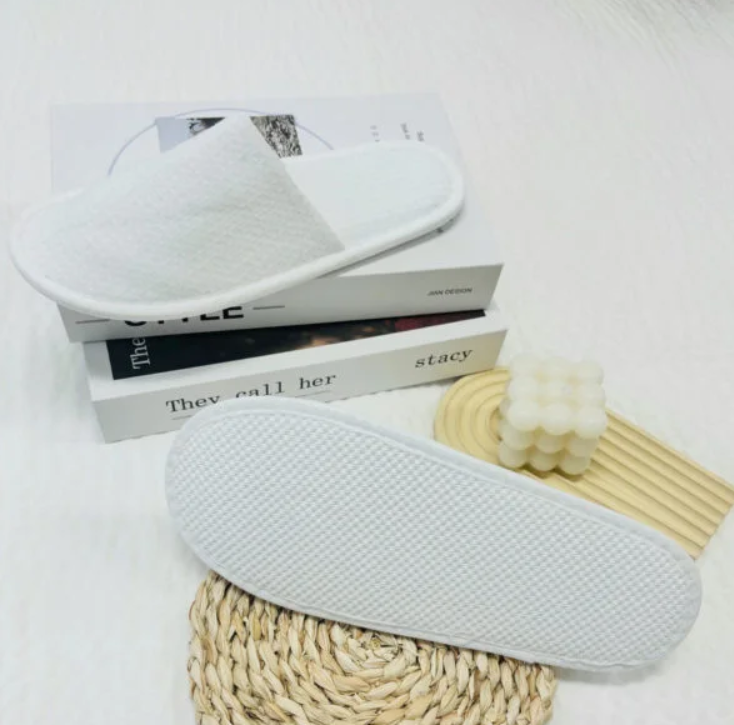
Sole type, thickness, and grip (Custom 5-star style disposable slippers)
- EVA sole: Light, scalable, and cost-friendly—suitable for cheap luxury positioning with a soft coral fleece upper.
- Comfort thickness: Choose a thickness that supports short indoor wear in guestrooms/spa while keeping cartons compact for wholesale shipments.
- Anti-slip outsole: Prefer anti-slip dot or textured pattern for bathroom use; final anti-slip expectations should be aligned with the buyer’s standards and usage scenario.
Sizing consistency
- Define size range (e.g., EU-focused sizing) and tolerance
- Confirm whether you want one-size-fits-most or multiple sizes for premium programs
- Ask for pre-production size approval and a retention sample per batch
Construction durability
- Stitching: straight seams, no skipped stitches, no fraying
- Binding: clean edges, no hard spots
- Glue/lamination: no peeling, no strong odor
Hygiene & user experience
- Individual packaging choice (band, sleeve, bag) to protect from dust and moisture
- Material feel vs. “sweaty” sensation (especially in warmer regions)
- Open-toe vs closed-toe comfort logic: open-toe often feels cooler; closed-toe can feel warmer and more “complete”
Packaging and shipping readiness
- Carton strength and internal packing plan to prevent compression
- Outer carton marks and barcode labels (if needed)
- Palletization plan for EU warehouses/distributors
For more procurement-focused content, browse more hotel amenities guides: https://amenitiesdacvir.shop/blog/
Customization / OEM / Private Label (logo, packaging, sampling, buyer files)
This is where most delays happen—so it’s worth structuring the process up front.
Logo methods (what works best, and how MOQ can change)
- Embroidery (embroidered logo hotel slippers)
- Best on: terry, velour (stable surface)
- Pros: premium look, durable
- Considerations: artwork complexity can affect stitching time and, sometimes, MOQ
- Heat transfer / thermal transfer
- Best on: smoother surfaces; good for gradients or small details
- Pros: sharper detail than basic print
- Considerations: test wash/wear expectations; confirm adhesion performance
- Woven label
- Best when you want a consistent brand mark without large surface decoration
- Pros: clean, repeatable, works across fabrics
- Considerations: label lead time can affect schedule
- Printing (screen/offset depending on material)
- Best for value-driven programs
- Pros: cost-efficient at scale
- Considerations: confirm rub resistance expectations and color matching approach
Packaging options (OEM + landed-cost logic)
Common choices for custom packaging hotel slippers:
- Single slipper vs pair pack (pair packs reduce sorting at housekeeping level)
- Paper band / paper sleeve (good balance of hygiene + cost)
- Individual bag (basic protection, can be upgraded to eco materials)
- Eco paper packaging (premium feel, aligns with sustainability programs)
Landed-cost tip: packaging weight and carton cube can shift your cost-to-port more than buyers expect. If you’re importing into Europe, confirm carton size and container utilization early—not after sampling.
Sampling workflow (practical and repeatable)
A clean sampling process reduces rework:
- Confirm spec sheet (fabric, sole, size, logo method, packaging)
- Receive artwork + packaging files
- Make a pre-production sample (or visual mockup first)
- Buyer approval (photo + physical sample if needed)
- Production with a signed “golden sample” retained for QC
What buyers should provide (to avoid delays)
To start OEM/private label smoothly, prepare:
- Logo file: AI / EPS / PDF (vector preferred), plus Pantone references if required
- Reference photos: placement examples, competitor benchmarks, or your brand guide
- Contents list: slipper style, size, fabric, sole, packaging, carton labeling needs
- Target market: EU country/region, distribution model, any buyer compliance requirements
- Forecast & order plan: helps optimize material planning and batch consistency
If you want to discuss an OEM plan with clear specs, contact our team for a quote: https://amenitiesdacvir.shop/about-us/
MOQ / Lead Time / Ordering Process (step-by-step)
MOQ and lead time depend on material & packaging, confirm by quote—especially when you add embroidery, custom labels, or premium packaging.
Typical ordering steps
- Inquiry (RFQ)
Share spec checklist + target market + expected volume (hotel group vs distributor) - Quotation
Quote based on materials, logo method, packaging, carton plan, and shipping terms - Sampling
Develop sample(s); confirm size, color, comfort, and branding output - Confirmation
Approve final spec and packaging; sign off on the “golden sample” - Mass production
Material inbound checks + in-line QC + packaging verification - Final inspection / QA
Batch consistency, odor, stitching, sole bonding, logo placement checks - Shipment
Export cartons/pallets prepared with marks; shipping method confirmed (sea/air)
Quality Control & Consistency (incoming, in-process, final)
For slippers, quality issues are often subtle—but they show up fast in guest feedback. A practical QC plan should cover:
Incoming material inspection
- Fabric hand feel and weight consistency
- Sole material (EVA/TPR) thickness and resilience
- Color tone under standardized light
- Packaging materials (paper weight, print clarity, adhesion)
In-process checks (during production)
- Stitch density and seam alignment
- Binding and edge finishing (no sharp edges)
- Logo placement tolerance (left/right consistency)
- Glue/lamination curing and odor control
Final inspection (pre-shipment)
- Random size checks across cartons
- Anti-slip pattern consistency
- Packaging integrity (no crushed sleeves; seals intact)
- Carton drop/stack readiness (practical shipping simulation)
To support importer requirements, photos, videos, and third-party inspection coordination are available upon request. For repeat programs, retaining a signed golden sample and batch records is the simplest way to keep each shipment aligned.
Export & Logistics for Europe (packing, marks, pallets, sea/air logic)
EU-bound shipments succeed when packaging and handling assumptions are made explicit.
Cartonization and protection
- Avoid over-compressing plush uppers (can deform product presentation)
- Use inner poly liners or moisture barriers when shipping in humid seasons
- Confirm carton strength grade appropriate for stacking and long transit
Outer carton marks (especially for distributors)
- SKU, size, color, quantity per carton
- Gross/net weight, carton dimensions
- PO number and destination warehouse code
- Handling marks (keep dry, this side up) as needed
Palletization (EU warehouse-friendly)
- Use stable pallet patterns; keep height practical for handling
- If wood pallets are used, align to import requirements (e.g., ISPM 15 where applicable)
- Consider corner protectors and stretch wrap to prevent transit shifting
Sea freight vs air freight (simple logic)
- Sea freight: best for planned replenishment, full cartons, stable demand
- Air freight: for urgent openings, short-notice replenishment, limited SKUs
If you’re importing as a distributor, mix-SKU container planning can reduce stockouts—just confirm carton sizes early.
How to reduce damage and claims
- Don’t leave packaging as an afterthought—cartons and pallet wrap matter
- Keep cartons within manageable weights to reduce drops
- Ensure consistent carton dimensions to prevent pallet “lean” in transit
Common Mistakes (at least 8 practical pitfalls)
- Choosing the cheapest fabric without considering guest comfort (complaints rise, replacements increase)
- Ignoring sole thickness and slip resistance—especially on wet bathroom floors
- Assuming embroidery works equally well on every fabric (it doesn’t; test first)
- No agreed “golden sample” → every reorder becomes a new negotiation
- Not specifying size tolerance → inconsistent fit across batches
- Underestimating packaging impact on landed cost (cube/weight adds up quickly)
- Skipping odor checks (adhesive smell can cause immediate negative reviews)
- Weak carton spec → crushed packaging and poor first impression on arrival
- Not confirming carton marks and barcode needs (warehouse receiving delays)
- Treating lead time as fixed despite custom labels/packaging (build buffer)
FAQ (at least 10 Q&As; questions include long-tail keywords)
1) What should I ask a custom logo hotel slippers manufacturer in an RFQ?
Ask for fabric options, sole material and thickness, logo method recommendations, packaging choices, MOQ/lead time assumptions, and QC checkpoints aligned to your target market.
2) Do you support hotel slippers wholesale programs for distributors in Europe?
Yes—wholesale programs are typically structured around repeat SKUs, carton/pallet standards, and reorder cadence. Final terms depend on spec and volume.
3) Are you a disposable hotel slippers supplier or do you offer reusable options too?
Many buyers start with disposable-style positioning, but we can also spec more durable uppers/soles for longer wear. The right choice depends on hotel tier and guest stay patterns.
4) Which looks better: embroidered logo hotel slippers or printed logos?
Embroidery tends to look more premium on terry/velour, while printing/transfer can capture finer details or gradients. The best option depends on fabric surface and your desired look.
5) When should I choose EVA sole hotel slippers vs TPR soles?
EVA is lightweight and cost-effective for high-volume programs. TPR often offers better durability and grip for premium tiers or longer-wear expectations.
6) Should I source open toe hotel slippers or closed-toe for EU hotels?
Open-toe is breathable and common for warm seasons or spa positioning. Closed toe hotel slippers can feel warmer and more complete—often preferred in cooler climates or premium rooms.
7) Do you offer eco friendly hotel slippers options?
Eco-focused specs are possible (e.g., material and packaging choices) and can be aligned to buyer requirements. Any compliance or testing documentation can be provided upon request where applicable.
8) Are you an OEM slippers factory China supplier, and how does that affect consistency?
OEM production can be consistent when specs, golden samples, and QC records are controlled. Consistency improves further with stable materials, fixed molds, and repeat packaging components.
9) What are common choices for custom packaging hotel slippers in boutique properties?
Boutique hotels often choose paper sleeves, eco paper wraps, or premium pair packs that match brand design. Packaging is also a practical tool to keep slippers clean in storage.
10) What’s a smart spec for slippers for boutique hotels without overspending?
A common approach is a mid-to-premium fabric (waffle/velour), a better-grip sole, and a refined logo method (woven label or embroidery), then invest selectively in packaging presentation.
11) What logo file formats do you need for a custom order?
Vector files are best: AI/EPS/PDF. If only PNG/JPG is available, you may need a redraw step before sampling.
12) How can I do a lower MOQ trial order?
Lower MOQ feasibility depends on material availability and packaging complexity. Starting with standard materials/soles and simpler packaging is usually the easiest path—confirm by quote.
Signed up at 68mx, like the sleek design. The deposit methods are easy. Maybe you’ll have better luck than me, check it out!: 68mx