
Moreover, a bathroom accessories program works best when it runs like a system. A neat tray, consistent packaging, and stable replenishment reduce friction every day. Therefore, sourcing decisions should balance comfort, hygiene cues, sustainability, and operational speed. Within that logic, a reliable hotel bathroom accessories set supplier becomes a practical partner for standardization, not a one-off purchase.
Featured essentials with visual references from the shop
Card-box dental kit (fast “first-night” resolution)
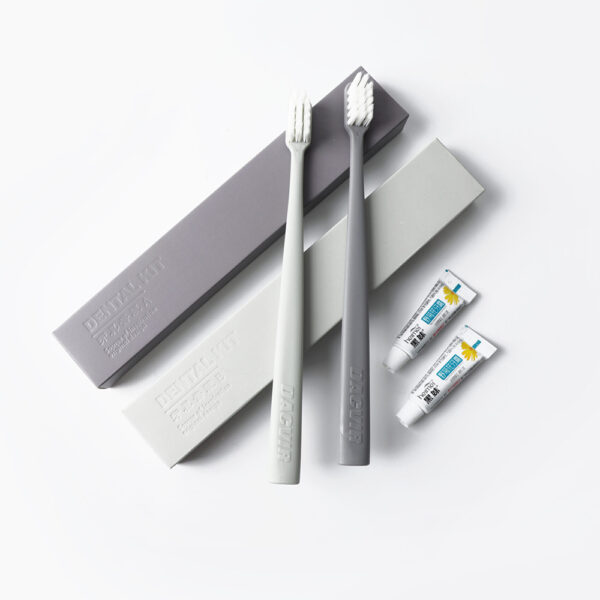
Additionally, dental kits tend to deliver a quick “problem solved” moment. A compact box protects items in storage and keeps the tray tidy. As a result, housekeeping routines stay consistent, even during high turnover.
Notably, the “complete set” approach often includes two toothbrush styles, plus toothpaste, inside a card box. That structure supports a clean presentation and quick placement in-room. Consequently, the kit feels intentional rather than improvised.
Clean, soft slippers (bathroom-to-room transition)
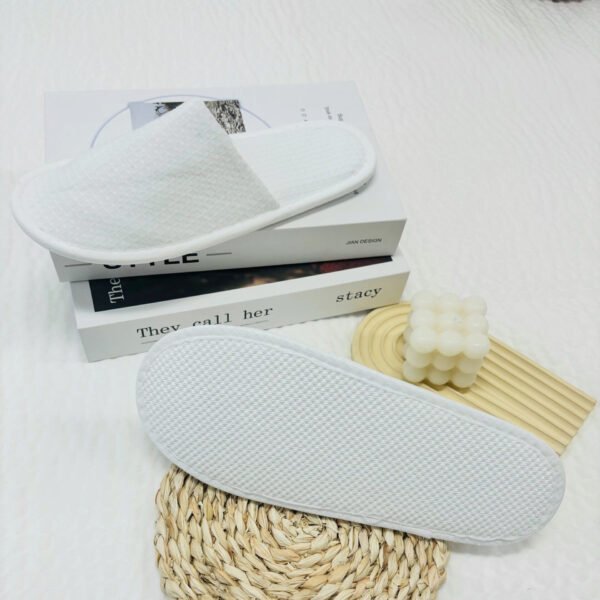
Meanwhile, slippers act like a small ritual that signals readiness. They also help maintain a perceived boundary between bathroom surfaces and the rest of the room. Therefore, properties that aim for a “prepared” look often keep slippers aligned with the amenity tray plan.
In practice, slipper selection works best when it matches climate and flooring. A breathable option fits warm regions and wet-room bathrooms. Conversely, a warmer material supports cooler seasons and stone floors.
Individually wrapped round soap (instant hygiene signal)
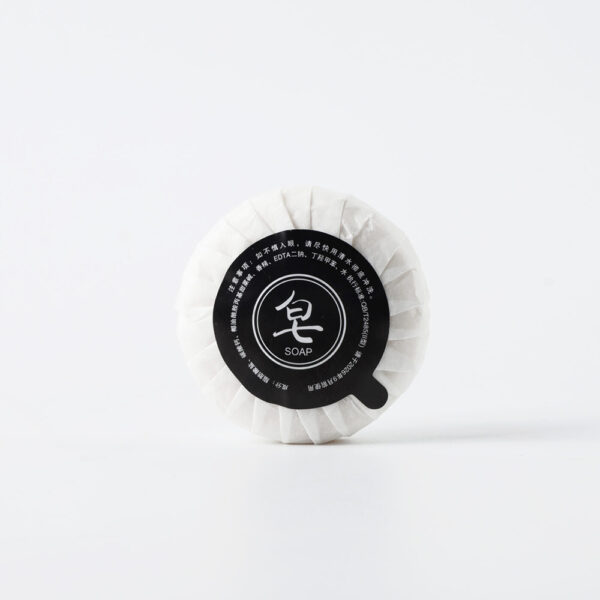
Furthermore, individually wrapped soap delivers a clear hygiene cue at first glance. The wrap also protects soap from moisture exposure during storage. As a result, the product remains presentable across a wide range of housekeeping conditions.
Also, portion sizing can be planned around stay length and positioning. The shop listing shows multiple weight options and carton quantities for customized wrapping. Consequently, packaging and logistics can be aligned with replenishment cycles.
Shaving kit (high-value add-on for specific stays)
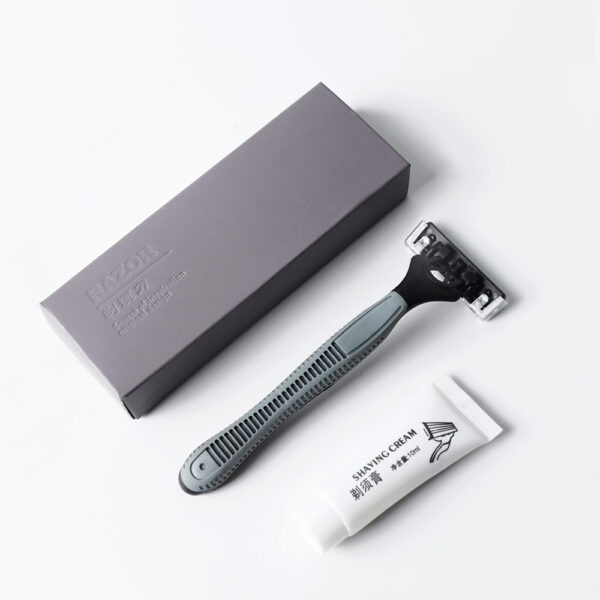
However, shaving kits typically deliver value unevenly across room nights. Therefore, many operations treat shaving as an “available when needed” item, or a tier-based add-on. That approach protects the tray from clutter while keeping preparedness high.
Importantly, the complete set example includes a razor with blades and a 10g shaving cream portion in a card box. That packaging reduces damage risk and supports clean storage. Accordingly, a shaving kit can feel deliberate without adding bulk.
What a well-built bathroom accessories set includes
First, a usable set covers predictable gaps without adding noise. Dental care, soap, and core wash items often form the baseline. Additionally, grooming add-ons can be grouped into small boxes to avoid scattered pieces. As a result, the tray stays calm and easy to audit.
Secondly, a complete “system set” usually includes more than toiletries. For example, one shop product describes a full set that combines dental items, comb, soap, shampoo, body wash, conditioner, lotion, slippers, a small care pack, a shower cap, and shaving items. Consequently, one standardized bundle can support fast room resets across many room types.
Thirdly, performance details matter more than decorative claims. Caps must close tightly, and packaging should resist tearing. Likewise, labels should stay readable under moisture and bright vanity lighting. Therefore, the set should be evaluated as an operational tool, not only a visual accessory.
Core components and what each does best
Moreover, each component supports a specific “moment” in the room journey. A tight mapping helps avoid overbuying and under-using. Consequently, planning becomes simpler for housekeeping, storage, and replenishment.
- Dental kit: resolves late arrival gaps and supports short-stay routines.
- Soap bar: signals hygiene immediately and simplifies replenishment checks.
- Wash family (shampoo / conditioner / gel / lotion): shapes comfort and perceived quality.
- Slippers: supports comfort and a clean transition after shower use.
- Vanity/care pack: prevents small grooming messes, especially during events.
- Shaving kit: supports business periods, conferences, and formal weekends.
- Shower cap: becomes useful in humid regions and wet-weather destinations.
Product features that influence quality and consistency
To begin with, “premium” in hotel essentials usually means fewer failures. A cap that does not leak prevents tray stains and housekeeping rework. Likewise, a box that does not crush prevents a “worn” look at check-in. Therefore, performance standards should lead the selection process.
Additionally, material choices shape comfort and durability. Softer bristles, stable soap formulation, and balanced fragrance reduce complaints and replacements. Meanwhile, packaging thickness and seal quality reduce breakage during handling. As a result, room standards remain consistent across shifts and seasons.
Notably, the shop examples highlight card-box packaging across multiple small kits. That format keeps items contained and makes placement predictable. Consequently, a tray can look uniform, even in compact bathrooms.
Scent, texture, and “broad compatibility”
Moreover, toiletries and soaps must work across broad preferences. A moderate fragrance profile typically feels safer than strong perfume notes. Similarly, textures should feel stable: shampoo should not feel watery, and lotion should absorb without tackiness. Therefore, comfort becomes a measurable requirement, not a marketing phrase.
At the same time, consistency across the wash family matters. A single scent direction across shampoo, conditioner, gel, and lotion feels intentional. Conversely, mixed scents can feel random, even when each product is acceptable alone. As a result, the bathroom experience reads cohesive.
Where these sets are used in hotels
Firstly, guestroom bathrooms remain the primary placement. A tray or vanity shelf works best when items remain visible but uncluttered. Additionally, consistent placement reduces time spent searching during cleaning and audits. Therefore, a simple “same place, every room” rule supports training.
Secondly, spa and wellness areas often need a parallel set logic. Slippers, shower caps, and small hygiene items support transition zones. Meanwhile, the product look should match the spa tone: calm, minimal, and clean. Consequently, amenities reinforce the overall design language.
Thirdly, meeting and event floors can benefit from compact add-on kits. A care pack, small soap, and a grooming item can support long days. Moreover, restrooms near ballrooms often see high traffic and fast depletion. As a result, packaging that withstands frequent restocking becomes critical.
Scenario mapping for practical planning
Furthermore, a scenario map reduces overstock and improves usefulness. A baseline set can stay stable, while add-ons flex by context. Consequently, procurement remains predictable, while operations stay adaptable.
- Airport / transit hotels: prioritize dental kits and soap for short stays.
- Business districts: keep shaving kits available during conference cycles.
- Resorts: emphasize wash-family comfort and slipper quality for longer bathroom time.
- Boutique properties: favor minimal, design-forward packaging with consistent typography.
- Extended-stay formats: consider larger sizes or refill-compatible options for longer occupancy.
Sustainable packaging that still looks premium
Importantly, sustainability starts with packaging discipline. A calm box layout and reduced mixed materials can lower waste and simplify sorting. Moreover, paper-based formats often photograph well, which matters for modern brand presentation. Therefore, sustainable packaging can support both operations and perception.
Additionally, kraft card boxes, paper wraps, and tidy cartons reduce plastic-heavy visual clutter. The shop catalog includes a kraft card box disposable set positioned as eco-friendly and travel-sized. Consequently, packaging can communicate “clean and responsible” without complex messaging.
Practical ways to reduce waste without sacrificing usability
Meanwhile, waste reduction works best when it stays measurable. A few practical tactics usually deliver more impact than vague claims. As a result, teams can set standards and track compliance.
- Right-size the baseline: reduce low-use items in-room and hold them as add-ons.
- Standardize packaging formats: prefer fewer material types to simplify disposal.
- Use portion sizing intentionally: match soap grams and liquid ml to stay length.
- Protect cartons in storage: reduce crushed packaging that triggers replacement waste.
- Favor clear labeling and batch codes: reduce disposal from unidentified stock.
Recyclability and “mono-material” logic
Moreover, mono-material packaging often improves recyclability. A paper box with minimal lamination sorts more easily than mixed foil layers. Likewise, simple inks and fewer coatings help paper recycling streams. Therefore, packaging specs should be treated as a design requirement.
At the same time, hygiene must remain non-negotiable. Individual wraps can be necessary for soap and small accessories, especially in humid environments. Consequently, the best approach often combines hygiene-sealed units with reduced outer packaging volume.
Customization workflow that avoids delays
Firstly, customization succeeds when it follows a controlled sequence. A set usually begins with a baseline SKU list and packaging format. Next, artwork and labeling details align with placement and room aesthetics. Therefore, a structured workflow prevents rework.
Secondly, there are “levels” of customization that affect time and complexity. Stock packaging with simple labeling is the lightest level. Meanwhile, private label printing and new packaging dielines require more checks. As a result, lead time planning should start with the desired customization level.
Step-by-step process for most hotel projects
Moreover, an orderly process keeps approvals fast and errors low. Each step should produce a clear deliverable, not vague alignment. Consequently, production can start with fewer surprises.
- Define the set architecture
- Baseline items for every room.
- Add-ons by tier, season, or request.
- Storage plan for back-of-house staging.
- Lock the functional specs
- Sizes (ml / g), closure types, and packaging format.
- Material expectations for slippers, boxes, and wraps.
- Fragrance direction and texture requirements for liquids.
- Prepare artwork and labeling inputs
- Logo files in vector format.
- Color references (Pantone or CMYK targets).
- Label text and required regulatory fields.
- Approve digital proofs
- Typography legibility under bathroom lighting.
- Barcode placement and batch code fields.
- Consistency across all SKUs in the set.
- Confirm pre-production samples
- Leak tests for bottles or tubes.
- Box durability checks after handling.
- Soap wrap integrity after storage simulation.
- Run production with defined QC checkpoints
- Incoming packaging inspection.
- In-line checks for print alignment and sealing.
- Final carton inspection and pallet stability.
Customization options that usually matter most
Additionally, certain custom elements deliver more value than others. A consistent label system and calm box design often matter more than flashy colors. Therefore, prioritization helps keep budgets focused.
- Logo placement and label consistency across every item.
- A single design system (fonts, spacing, icon style) for the full set.
- A unified scent family for the wash quartet.
- Packaging that stays crisp after shipping and storage.
MOQ, lead time, and delivery planning
To start, MOQ depends on SKU type and customization level. A complete multi-item set on the shop page notes a MOQ of 1,000 units for that bundled configuration. Consequently, set-level MOQ can differ from single-item MOQ.
Next, individual items often allow smaller trial volumes when packaging stays standard. For example, a tube-based toiletries listing notes MOQ 50 for non-custom tubes, while customized tubes list MOQ 3,000. Therefore, pilot runs often fit best with standard packaging, while branded programs scale through larger MOQ tiers.
Also, soap programs frequently define MOQ by wrap type and gram weight. One soap listing shows customized pleated wrapping and notes MOQ 3,000, with carton quantity ranges by weight such as 10g, 15g, 20g, and 25g. As a result, soap planning can be optimized around carton density, storage space, and replenishment frequency.
Lead time planning by customization level
Meanwhile, lead time usually follows complexity. Stock items often move fastest because packaging and tooling already exist. Conversely, private label work needs proofing and print scheduling. Therefore, lead time estimates should be built from the customization stack, not guesswork.
A practical planning model often looks like this:
- Stock packaging, no print changes: shortest planning window.
- Simple print on existing dielines: moderate window for proofing and print runs.
- New dielines / new components: longer window for sampling and approvals.
- Multiple SKUs with matched design system: additional coordination time.
Shipping readiness and export clarity
Furthermore, shipping success depends on documentation discipline. Carton markings, packing lists, and consistent SKUs reduce receiving delays. Additionally, batch coding supports traceability and inventory rotation. Consequently, export readiness becomes a repeatable routine, not a special event.
Quality checks that protect room standards
Importantly, quality control should mirror real hotel conditions. Bathrooms create humidity, bright lighting, frequent handling, and fast replenishment. Therefore, tests should reflect those stresses rather than ideal storage assumptions.
Additionally, packaging integrity should be treated as a quality metric. A crushed corner or torn seal changes perception instantly. Meanwhile, liquid leakage creates housekeeping work and damages trays. As a result, simple physical tests often deliver high value.
A practical QC checklist for bathroom accessories sets
Moreover, a checklist makes inspections consistent across shipments. It also reduces debate during receiving and staging. Consequently, teams can train faster and audit more reliably.
Packaging and presentation
- Box corners resist crushing under light pressure.
- Seals remain closed during handling and vibration.
- Printing stays aligned and legible across SKUs.
- Barcode and batch fields remain readable after moisture exposure.
Liquids and closures
- Caps close evenly and reopen smoothly.
- Bottles and tubes show no leaks after inversion tests.
- Labels do not peel after wipe-down cleaning.
Soap and small accessories
- Wraps stay intact in humid storage areas.
- Soap portions do not deform or crack.
- Small kits open cleanly without scattering contents.
Consistency rules that improve perceived quality
Also, perceived quality often depends on repeatability. The same items should appear in the same positions, room after room. Likewise, the set should look calm at a quick glance. Therefore, a “visual standard” should be documented like a housekeeping standard.
Case examples and application snapshots
Case 1 — City business property with late arrivals
Firstly, a city property often sees short stays and late check-ins. Therefore, a baseline set that prioritizes dental kits and wrapped soap reduces first-night gaps. Additionally, a unified wash-family label system keeps the tray neat in small bathrooms.
Meanwhile, shaving kits can be staged as add-ons during conference weeks. That approach prevents unused items from filling bins during leisure-heavy weekends. Consequently, inventory aligns with occupancy patterns without sacrificing preparedness.
Case 2 — Coastal resort with wet-room bathrooms
Next, a coastal resort often faces humidity and frequent shower use. As a result, packaging must resist moisture and handling, especially for soap wraps and cartons. Moreover, slippers support a comfort cue after beach and pool routines.
Also, sustainability messaging often matters more in resort contexts. Paper-forward packaging and reduced mixed materials can support positioning. Therefore, packaging choices can contribute to brand clarity without adding extra signage.
Case 3 — Boutique design-forward property with photographed bathrooms
Notably, boutique rooms are photographed constantly. Consequently, label consistency, calm typography, and clean color tone become critical. Meanwhile, fewer SKUs with stronger packaging often outperform larger piles of mixed items.
Additionally, a “three-zone tray” layout can help. A cleanse zone, hair zone, and care zone create structure, even on small vanities. Therefore, the bathroom reads intentional under both daylight and warm lighting.
Case 4 — Extended-stay floors with longer replenishment cycles
Finally, extended stays shift the economics of portions and replenishment. As a result, larger sizes or refill-compatible planning can reduce replacement frequency. Meanwhile, a compact accessory baseline still matters for arrivals and forgetfulness.
Additionally, storage space becomes a constraint on long-stay floors. Carton density and predictable SKU counts reduce back-of-house clutter. Therefore, carton planning should be included early in set design.
Buying tips that keep decisions practical
To begin with, buying becomes easier when requirements are written as “pass/fail” criteria. A simple scorecard reduces subjective debate and speeds approval cycles. Moreover, the scorecard should include both performance and presentation. Therefore, it becomes a shared operational language.
Next, the fastest way to reduce waste is to trim low-use baseline items. Those items can move into an add-on drawer or request-based stash. Additionally, that choice keeps the tray calm and the room look consistent. As a result, perceived quality often improves while costs stabilize.
Also, packaging often carries the biggest operational leverage. Card boxes and neat wraps store well, stage easily, and replenish quickly. Meanwhile, inconsistent packaging slows housekeeping and creates visual clutter. Consequently, packaging standardization deserves early attention.
Internal reference for product browsing: Shop collections amenitiesdacvir.shop
FAQ
1) What is the difference between a “set” and a “pile of items”?
Firstly, a set follows a repeatable architecture and placement logic. Each item has a defined role and a defined location. Moreover, a set reduces training time because room standards stay stable. Therefore, a set behaves like an operational system, not a random collection.
2) Which items usually belong in the baseline for every room?
Generally, the baseline should cover predictable daily essentials. Wrapped soap and dental items often deliver the most immediate usefulness. Additionally, a core wash family supports comfort and consistency. Consequently, add-ons can stay flexible without weakening the baseline.
3) When does it make sense to keep shaving kits as add-ons?
However, shaving kits typically show uneven usage by season and segment. Business-heavy periods often increase demand, while leisure weeks reduce it. Therefore, keeping shaving as an add-on protects the tray from clutter. Meanwhile, readiness stays high through staged inventory.
4) How can sustainability improve without risking hygiene?
Importantly, hygiene and sustainability can coexist through smart packaging choices. Paper-forward outer packaging can reduce plastic-heavy presentation. Additionally, mono-material decisions improve sorting outcomes. As a result, hygiene-sealed inner units can remain intact while outer waste drops.
5) How should MOQ be approached for a new program?
Firstly, MOQ should be mapped by SKU and customization level. A bundled set can have one MOQ, while individual items follow different thresholds. Additionally, standard packaging often allows lower MOQs than private label work. Consequently, pilot programs often start with standard formats and scale into customization later.
6) What packaging formats tend to restock fastest?
In practice, card-box kits and consistently wrapped soaps restock quickly. They also stage well in housekeeping carts without loose pieces. Moreover, uniform sizes help prevent misplacement across rooms. Therefore, standardized packaging reduces both time and visual variance.
7) What should be checked before confirming production?
Notably, proofs and samples should be treated as operational tests. Labels must remain readable under moisture and bright lighting. Additionally, closures must resist leakage during handling. Consequently, early sample checks prevent large-scale rework later.
8) How can consistency be protected across multiple room tiers?
Lastly, consistency works best with a stable baseline and controlled add-ons. The same design system should run across items, even when quantities differ. Moreover, a tray layout standard helps maintain the “same look” across floors. Therefore, tier differentiation can feel premium without drifting into chaos.
Summary and practical next steps
Overall, hotel bathroom accessories sets perform best when they are designed as an operational system. Moreover, the best outcomes come from simple architecture, consistent packaging, and predictable replenishment. Therefore, buying decisions should focus on failure avoidance, hygiene cues, and calm presentation.
Three actionable recommendations
- Document a baseline set and a tray layout standard before expanding the SKU list.
- Choose packaging formats that protect presentation during shipping, storage, and restocking.
- Align MOQ and customization level with rollout phases to avoid delays and rework.
Finally, for specification-driven selection and a clear view of available sets, the shop catalog and product pages help map options quickly. Consequently, a consistent program can be built with fewer surprises and cleaner room standards. For the next step, explore the range and request set alignment through hotel bathroom accessories set supplier .